Use a stage-aware, persona-targeted question bank instead of a generic script. Triage fast with BANT, then go deeper with MEDDIC or CHAMP once a deal looks real. Ask four to six sharp questions per call, not twenty shallow ones. That combination gets you to disqualification faster and gives every rep a clear next step instead of a guess.
TL;DR:
- Asking four to six targeted qualifying questions per call, based on deal stage and persona, accelerates disqualification and clarifies next steps effectively.
- Utilizing frameworks like BANT, MEDDIC, or CHAMP, tailored to the specific deal type, ensures qualification is evidence-based and not just impression-based.
- Prioritize questions about fit, problems, impact, and decision process, while timing budget and procurement inquiries until after trust and pain are established.
- Structured question sequencing and tracking, combined with real-time AI coaching, improve rep discipline and reduce no-decision risks.
- Focus on early-stage qualification signals such as budget readiness, decision authority, procurement requirements, and past buying history to minimize late-cycle surprises.
Table of Contents
- Why B2B Qualifying Questions Matter More Than Framework Loyalty
- The Qualifying Question Bank: 60+ Questions Organized by What They Reveal
- How to Sequence Qualifying Questions on a Discovery Call
- Which Questions to Ask a CFO, CTO, CISO, or VP Sales
- Procurement Screening and the Top Disqualification Signals
- Who Backs This Question Bank
- What I’d Fix First If I Were Coaching Your Team
- Where CoachMode Fits Into Your Qualifying Process
- Sources
Why B2B Qualifying Questions Matter More Than Framework Loyalty
Qualification is an evidence test, not a vibe check. A deal is qualified when specific, checkable facts back it up: a named buyer, a confirmed problem, a plausible budget window, a real timeline. If you can’t write the evidence down, you don’t have a qualified lead, you have a hopeful guess.
Frameworks exist to organize that evidence collection, not to replace it. Pick based on deal type:
- BANT for fast triage on transactional or short-cycle deals where speed matters more than nuance.
- MEDDIC for enterprise deals with multiple stakeholders and a formal procurement process.
- CHAMP when the prospect’s challenges, not budget, drive the early conversation.
- SPICED for teams that want a modern spin on BANT with more emphasis on impact and outcomes.
- Hybrid BANT to MEDDIC for most B2B pipelines, since combining fast triage with deeper enterprise qualification lifts win rates compared to running one framework in isolation.
Procurement now sits at the table in roughly half of B2B buying cycles, which is exactly why stricter, earlier qualification pays off. Skip it, and you’re negotiating with people who never had signing power in the first place.
The Qualifying Question Bank: 60+ Questions Organized by What They Reveal
Here’s the practical bank. Pick four to six questions per call based on stage and persona. Don’t run the whole list on every call. That’s how discovery turns into an interrogation.
1. Fit and ICP questions
These confirm the prospect matches your ideal customer profile before you spend real time on them.
- “How many people on your team would touch this tool day to day?” Reveals scale and license potential; follow up by asking who else would need access.
- “What are you currently using to solve this problem?” Reveals incumbent tools and switching friction; follow up with “What made you start looking at alternatives?”
- “How is your team structured around this function?” Reveals org complexity; follow up by mapping who reports to whom.
- “What’s changed in your business in the last six months that brought this to the top of your list?” Reveals urgency and trigger events.
Pro Tip: Pull firmographic and technographic signals before the call using RevRing’s AI predictive dialer platform for enrichment data. Screening fit before human contact saves your best questions for confirming the story, not discovering it from scratch.
2. Problem and impact questions
- “Walk me through what happens today when this problem shows up.” Reveals real workflow, not a theoretical one.
- “What’s the cost of doing nothing here for the next twelve months?” Reveals whether urgency is real or manufactured.
- “Who else on your team feels this pain besides you?” Reveals whether this is an individual frustration or a company priority.
- “If this stayed exactly the same next year, what would that cost you?” Follow up with a numeric drill: “Can you put a rough dollar figure on that?”
3. Metrics and success criteria
- “What does success look like in numbers, ninety days after rollout?” Reveals whether the buyer has thought past the sale.
- “How are you measuring this today?” Reveals data maturity and whether ROI will be provable later.
- “What metric would your boss ask about first?” Reveals the internal scorecard you’re actually selling against.
4. Budget and timing
- “Is there a budget already allocated for this, or would it need to be approved?” Reveals whether you’re early or late in the cycle.
- “What’s driving the timeline, an internal deadline, contract renewal, or something else?” Reveals whether urgency is self-imposed or externally forced.
- “If we moved forward, whose budget would this come out of?” Reveals the actual funding source, which is often not the person you’re talking to.
- “What happens if this slips to next quarter?” Reveals how firm the timeline really is.
5. Decision process and stakeholders
- “Besides yourself, who needs to sign off before this moves forward?” Reveals the buying committee.
- “Has your company bought something like this before? How did that process go?” Reveals procedural friction ahead of time.
- “Who would be the biggest skeptic on this, and why?” Reveals hidden objections before they surface late.
- “If everyone agrees this is the right fit, what’s the actual approval sequence?” Reveals steps you can start working in parallel.
6. Technical and implementation fit
- “What systems would this need to integrate with?” Reveals technical scope and potential blockers.
- “Who owns security review on your side?” Reveals whether a SIG or vendor questionnaire is coming.
- “What would rollout need to look like given your team’s bandwidth?” Reveals implementation risk before you promise a timeline you can’t hit.
7. Procurement and disqualification questions
- “Do you have a standard vendor paper you require, or would you work from ours?” Reveals legal friction early.
- “What’s your typical payment terms, net 30, net 60?” Reveals whether finance will slow the deal.
- “If you did nothing and stuck with the status quo, would that be acceptable?” Reveals whether “no decision” is the real competitor.
- “Is there a security review requirement, like a SIG questionnaire, for vendors your size?” Reveals procurement complexity.
8. Phrase variants: executive vs. operational
Executives respond to outcome framing: “What would solving this be worth to the business this year?” Operational buyers respond to workflow framing: “Walk me through your week when this problem hits.” Same intent, different entry point. Match the phrasing to the seat, not the script.
How to Sequence Qualifying Questions on a Discovery Call
Structure beats intensity. Top performers ask roughly 12 to 15 thoughtful questions across a 30 to 45 minute call. Reps who ask fewer than six tend to lose deal velocity because they never surface the evidence needed to move forward confidently.
Run the call in this order:
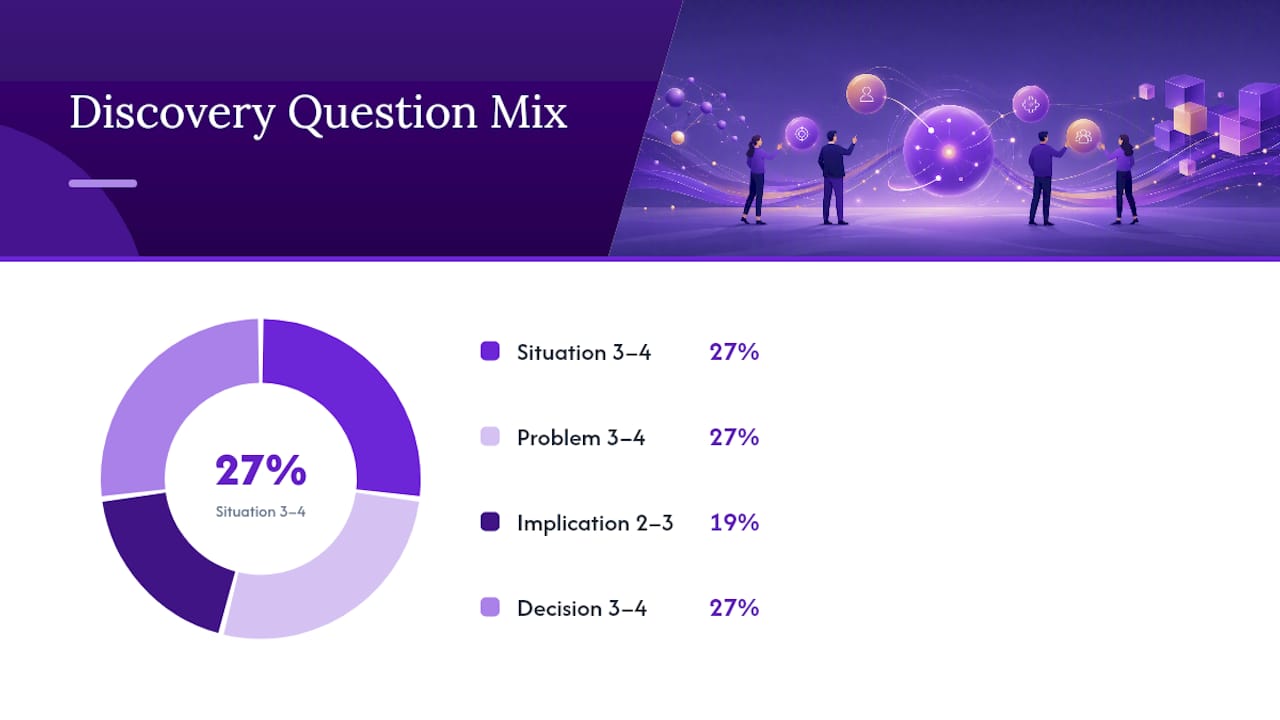
- Situation (3 to 4 questions): current state, tools, team structure.
- Problem (3 to 4 questions): what breaks, who feels it, how often.
- Implication (2 to 3 questions): cost of inaction, downstream effects.
- Decision criteria and timing (3 to 4 questions): budget, process, stakeholders.
That SPIN-like flow keeps the conversation from feeling like a checklist, and it materially increases buyer talk time when you use silence and follow-ups correctly.
The single highest-leverage follow-up is simple: “Tell me more about that.” Use it after every answer that sounds rehearsed. Numeric drills work well for vague pain: if a buyer says a problem is “costly,” ask them to put a number on it before moving on.
Defer budget questions until you’ve earned the right with two or three problem questions. Push harder, more directly, once the prospect has already admitted real pain. A blunt “what’s your budget” in minute two gets a guarded answer. The same question in minute twenty gets a real one.
Pro Tip: *Track your own talk ratio.
Which Questions to Ask a CFO, CTO, CISO, or VP Sales
The right question changes with the seat, and it changes with the stage of the deal.
- CFO: “What return would justify this investment in your first year?” Metrics and ROI framing, reserved for validation stage.
- CTO: “What would integration with your current stack actually require?” Technical fit, best asked during discovery once problem fit is confirmed.
- CISO: “What does your security review process look like for new vendors?” Compliance and risk evidence, reserved for validation or procurement stage.
- VP Sales or CRO: “What would this be worth if your team hit quota six weeks faster?” Outcome and speed framing, useful from discovery through close.
- Procurement: “What’s your standard contract paper and payment terms?” Reserved strictly for the procurement stage, never earlier.
Map the stage first, then the persona. Asking a CISO about ROI at the prospecting stage wastes the conversation; asking a CFO about integration details wastes theirs. A persona by stage matrix prevents that mismatch, and it’s the single biggest gap in most generic question lists.
Procurement Screening and the Top Disqualification Signals
Procurement questions belong late, but they need to be asked before you build a proposal, not after. Confirm paper preference, standard payment terms, whether a SIG or vendor security questionnaire applies, and the average legal turnaround your prospect has experienced with past vendors. Each answer either shortens your close cycle or tells you it’s about to stretch.
The ten questions below flag no-decision risk before it costs you a quarter:
- “Is there budget allocated, or would this need new approval?”
- “Who has final signing authority, and have you spoken with them directly?”
- “What happens if you do nothing?”
- “Has a similar project been shelved here before?”
- “Is there a competing internal priority for this budget?”
- “What’s your standard procurement timeline for a vendor this size?”
- “Would legal review require outside counsel?”
- “Is there an existing vendor consolidation initiative that affects this?”
- “What’s the realistic worst case timeline if approvals stall?”
- “If your champion left the company tomorrow, would this deal survive?”
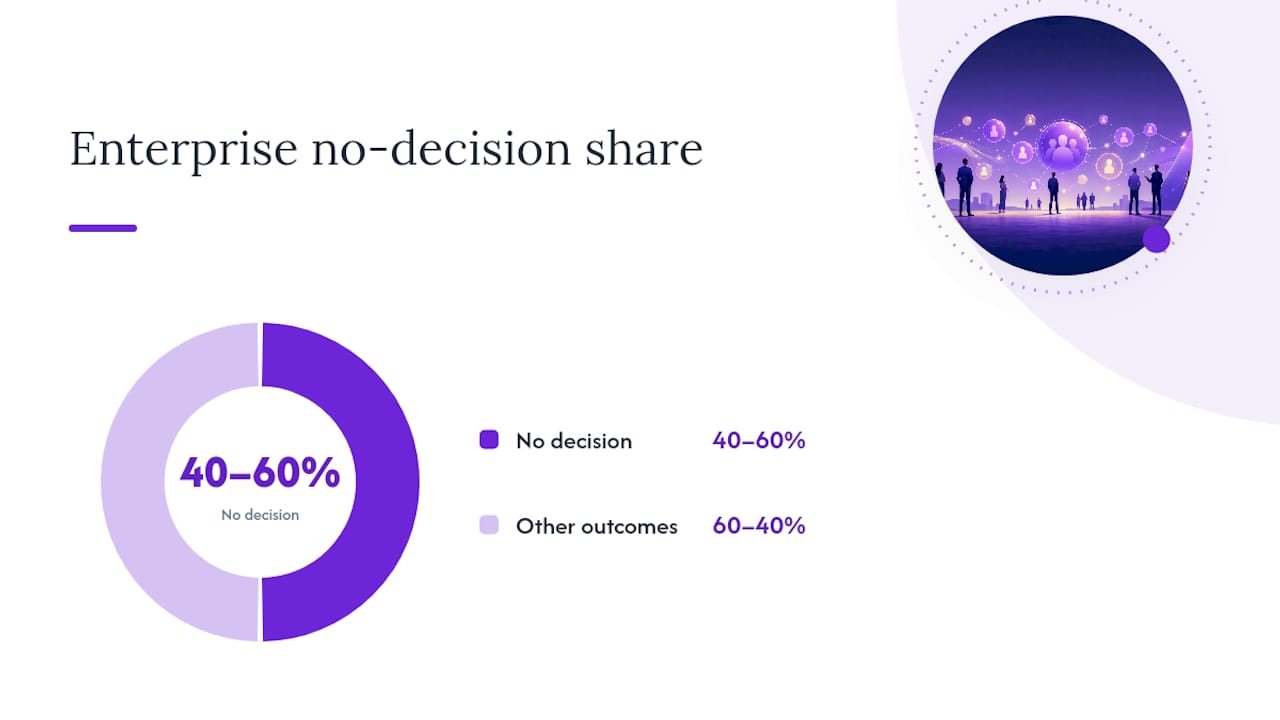
Forty to 60 percent of forecasted enterprise deals end in no decision, which is exactly why these questions matter more than another round of feature discussion. When the answers point to no decision, log the verdict in your CRM with the specific reason and a revisit date tied to a real trigger, like a budget cycle or contract renewal, not a vague “check back in six months.”
Who Backs This Question Bank
This guide was built by Ryan, an editorial contributor focused on practical B2B sales execution and coaching methodology. The question sets and sequencing guidance draw on discovery-call research and stage-based frameworks used across enterprise and mid-market sales motions.
Real-time AI coaching tools can listen to live calls and surface the next question or objection response when a rep needs it; post-call scoring can show which qualifying questions actually got answered versus glossed over. That combination, live prompting plus after-call grading, is what helps reps hold silence, avoid early budget asks, and remember to surface procurement questions before they matter.
What I’d Fix First If I Were Coaching Your Team
The biggest mistake I see isn’t a missing question, it’s timing. Reps ask about budget too early, talk to one stakeholder the whole cycle, and skip procurement until it blows up the close date. All three are fixable without a new framework.
Three moves work fast: run structured call reviews weekly, score calls against a real rubric instead of gut feel, and make multi-threading mandatory before a deal moves to validation stage. Coach on cadence, not just content, and do it every week, not once a quarter.
— Ryan
Where CoachMode Fits Into Your Qualifying Process
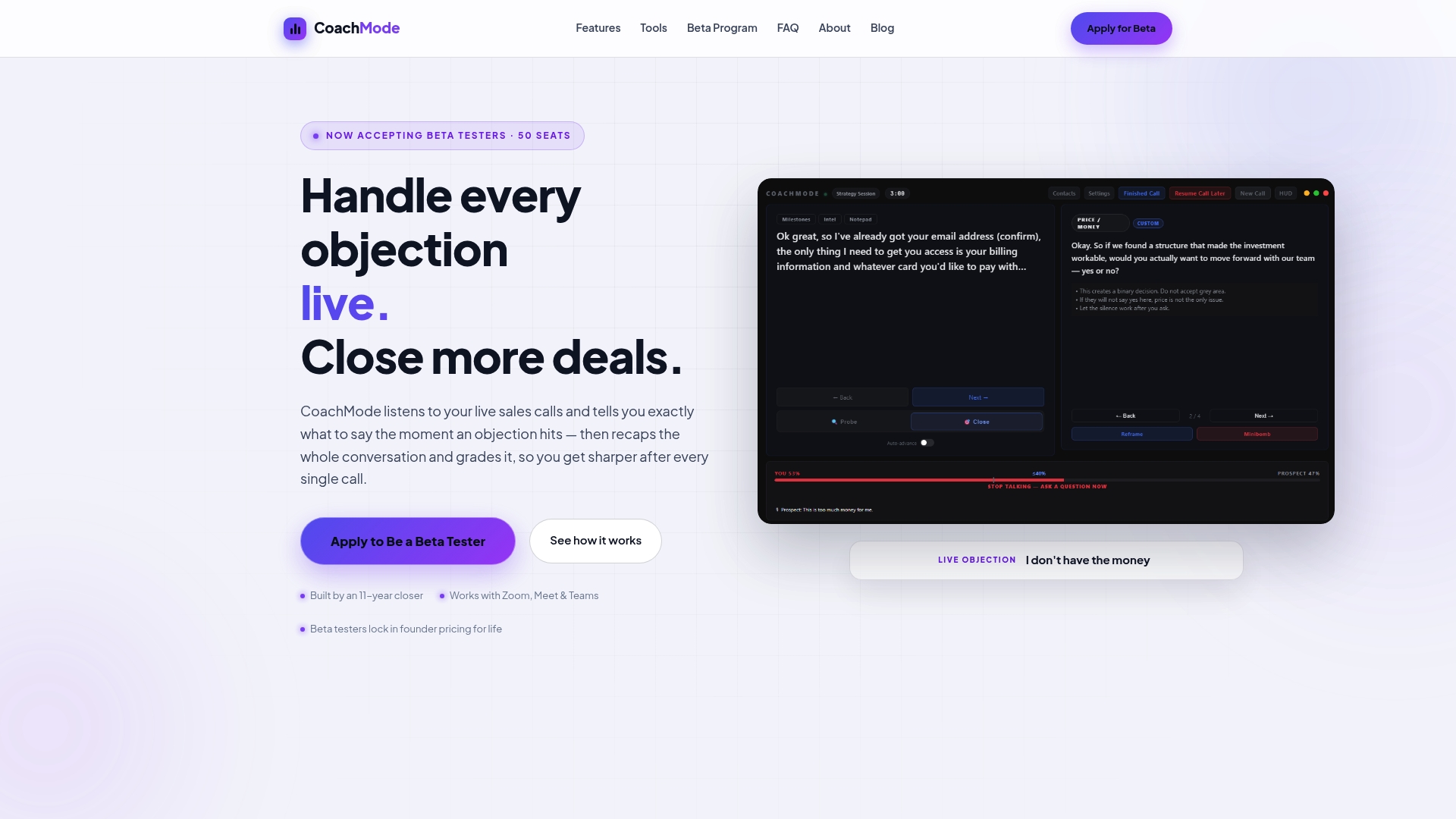
Some real-time AI coaching tools can help close the gap between knowing the right question and actually asking it under pressure. These tools listen to live calls and surface the next qualifying question or objection response in real time, helping reps who might otherwise freeze on critical questions.
Post-call scorecards can show which categories from a question bank got skipped, such as budget, decision process, or procurement, so managers can coach the specific gap more effectively. Patterns like consistently single threading or dodging budget conversations can become apparent sooner with proper scoring systems. If you want fewer no-decision losses and faster disqualification on the deals that were never going to close, start with real-time AI sales coaching on your next live call.
Sources
- Discovery Call Questions: 30 Best for B2B Sales | Sendspark
- B2B Lead Qualification: Criteria and Process | Lead Seeker
- B2B Sales Discovery Questions: 50+ by Stage & Persona | Uplift Sales
- B2B Sales Qualification: 2026 Playbook for B2B Teams | SyncGTM